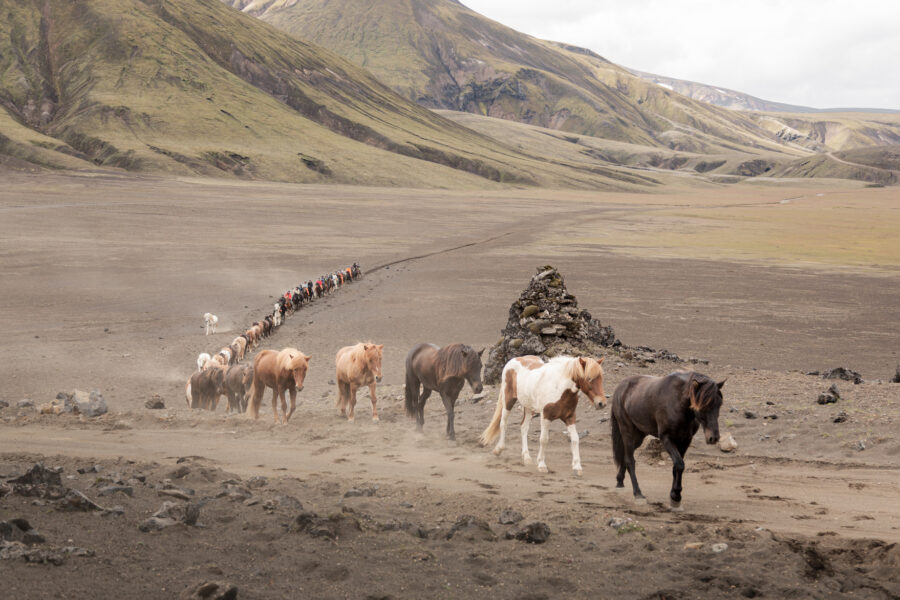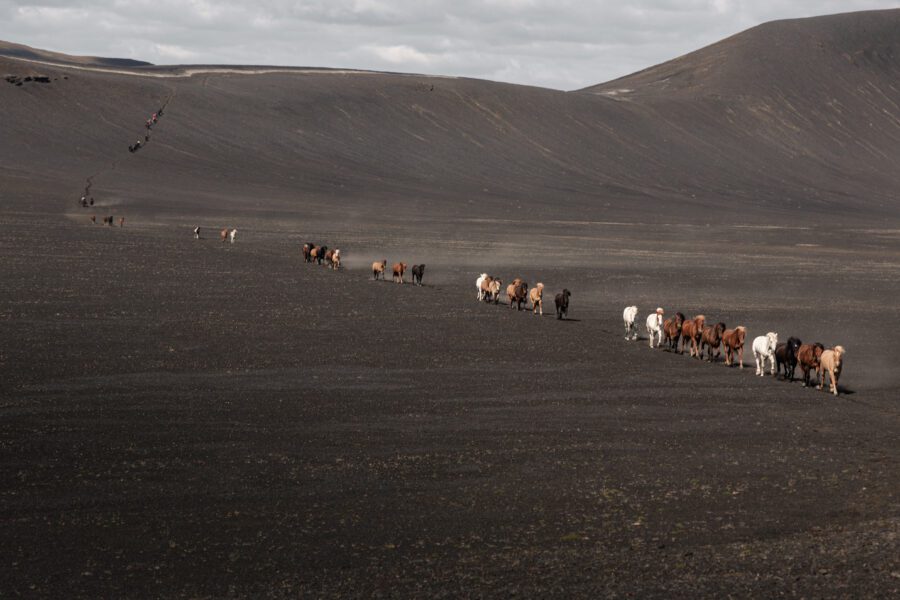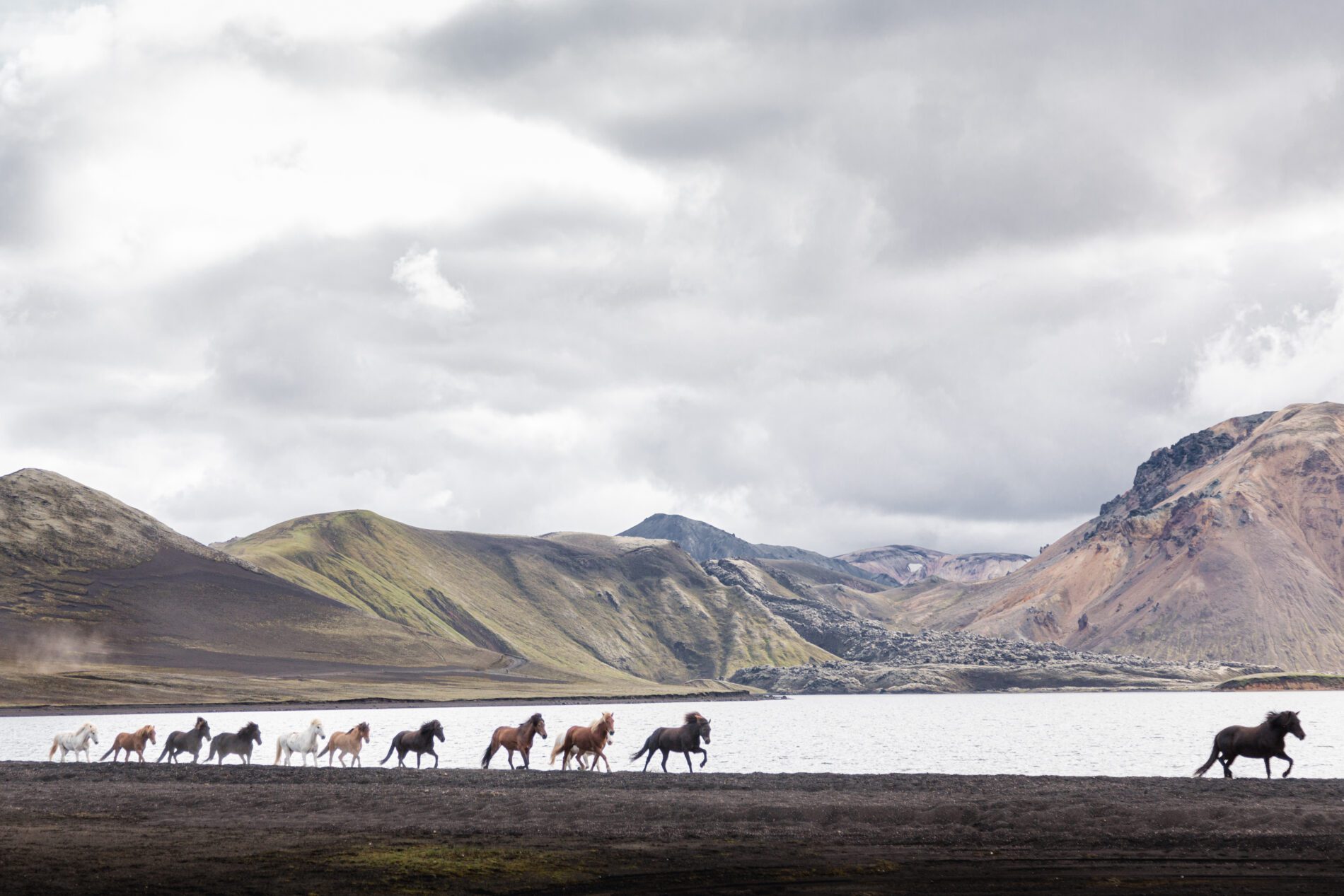
The story of the Icelandic Horse begins during the Viking Age, when Norse settlers arrived in Iceland in the late 9th and early 10th centuries. These settlers brought horses with them from Scandinavia and the British Isles, relying on them for transport, farm work, and communication between distant settlements. Shortly after Iceland was fully settled, the importation of horses was banned, a rule that remains in force today. Because of this strict isolation, the breed has remained remarkably unchanged for over 1,100 years. Horses that leave Iceland are never allowed to return, which protects the native population from disease and preserves the genetic purity of the breed.
Although the Icelandic Horse is smaller than many other horse breeds, usually standing between 13 and 14.2 hands high, it is considered a true horse rather than a pony. Its compact and muscular build gives it exceptional strength, allowing it to carry adults comfortably over long distances and difficult terrain. Strong legs, a deep chest, and dense bone structure contribute to its durability, while its thick mane, tail, and distinctive double-layered winter coat enable it to withstand Iceland’s cold, wind, and snow. During summer, this heavy coat sheds dramatically, revealing a surprisingly athletic and elegant body beneath.
One of the most remarkable features of the Icelandic Horse is its unique gaits, which set it apart from most other breeds. In addition to the standard walk, trot, and canter, many Icelandic Horses can perform two extra gaits. The most famous of these is the tölt, a four-beat lateral gait that is incredibly smooth to ride. Because there is no moment where all four hooves leave the ground, riders experience minimal movement in the saddle, making it possible to travel long distances in comfort. The other special gait, known as flying pace, is a fast two-beat lateral gait performed at high speed. Flying pace is typically reserved for racing and requires both athletic ability and precise training, with only the most talented horses excelling at it.
Temperament is another reason the Icelandic Horse is so highly valued. These horses are known for being friendly, calm, and willing, yet confident and intelligent. Over centuries, they learned to think independently while navigating dangerous terrain, rivers, and unpredictable weather. This history has produced a horse with strong self-preservation instincts rather than nervousness, making it exceptionally sure-footed and trustworthy. The breed’s gentle nature makes it suitable for beginners and children, while its power and responsiveness still satisfy experienced riders.
Breeding and care of the Icelandic Horse are treated with great respect and precision. Strict breeding standards are maintained both within Iceland and internationally, focusing on healthy conformation, clear gaits, and good temperament. The breed is known for its excellent health, hard hooves that often do not require horseshoes, and a long lifespan that commonly reaches 30 years. Unlike many modern breeds, Icelandic Horses often remain rideable well into old age, further emphasizing their durability.
Culturally, the Icelandic Horse holds a special place in Icelandic society. It appears frequently in medieval literature, especially the Icelandic sagas, where horses are often named and described as loyal companions and symbols of honor. Even today, horses play an important role in everyday life, from leisure riding and competitions to traditional sheep roundups across the highlands. The bond between horse and rider remains deeply rooted in Icelandic culture, and the breed is widely regarded as a national treasure.
Today, Icelandic Horses can be found all over the world, particularly in Europe and North America. They are used for trail riding, gaited competitions, endurance riding, therapeutic programs, and horse tourism. Despite their global popularity, the heart of the breed remains in Iceland, where the landscape that shaped them continues to define their character.
In many ways, the Icelandic Horse represents the perfect balance between strength and gentleness, tradition and modern use. To ride one is to experience a partnership forged by centuries of trust, shaped by nature, and preserved through careful stewardship. It is not just a ride through the countryside, but a journey through history, carried on four sure-footed hooves.