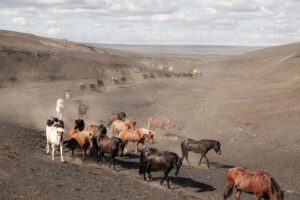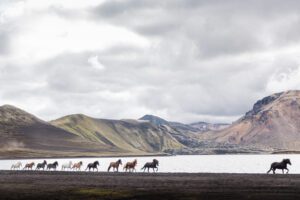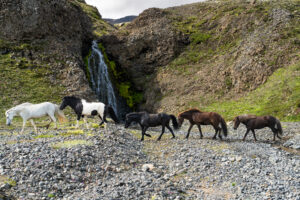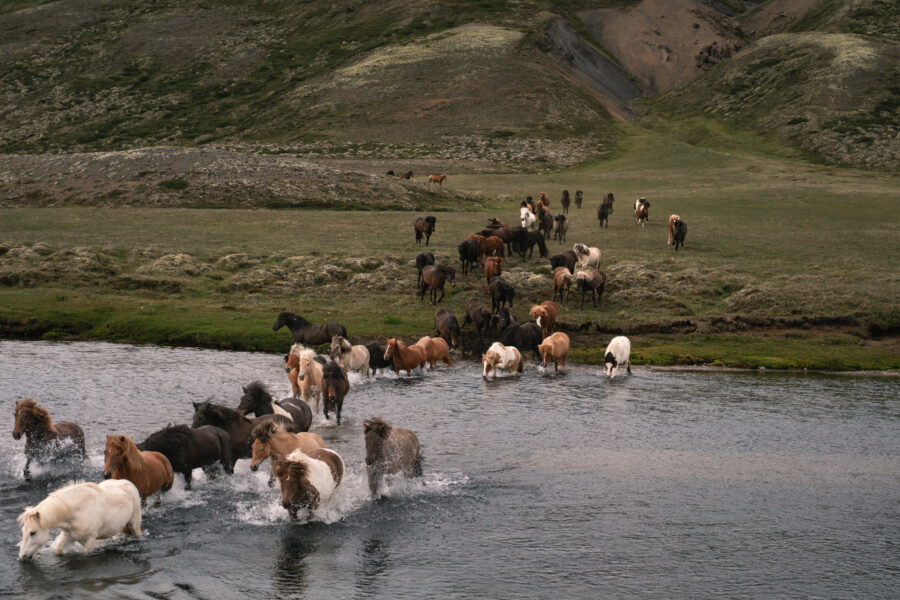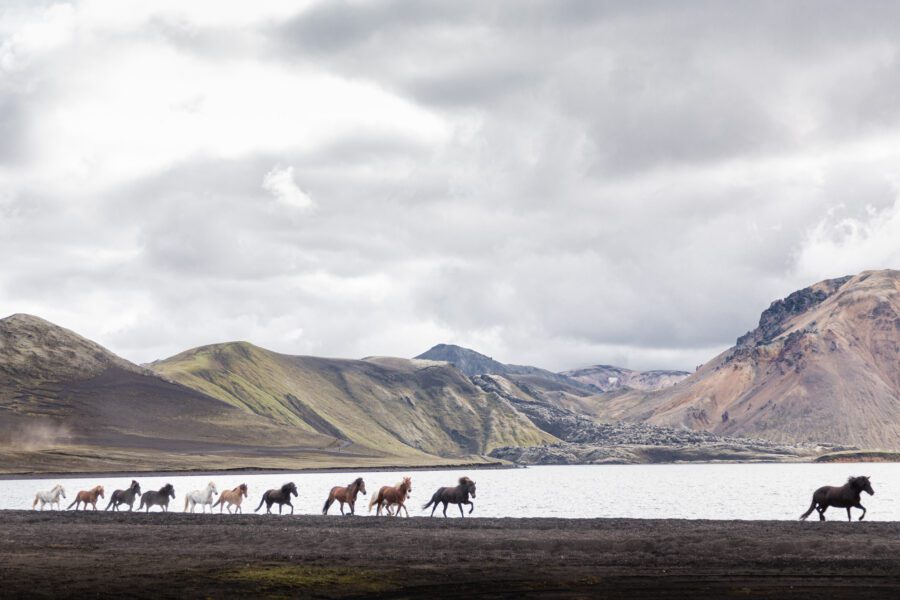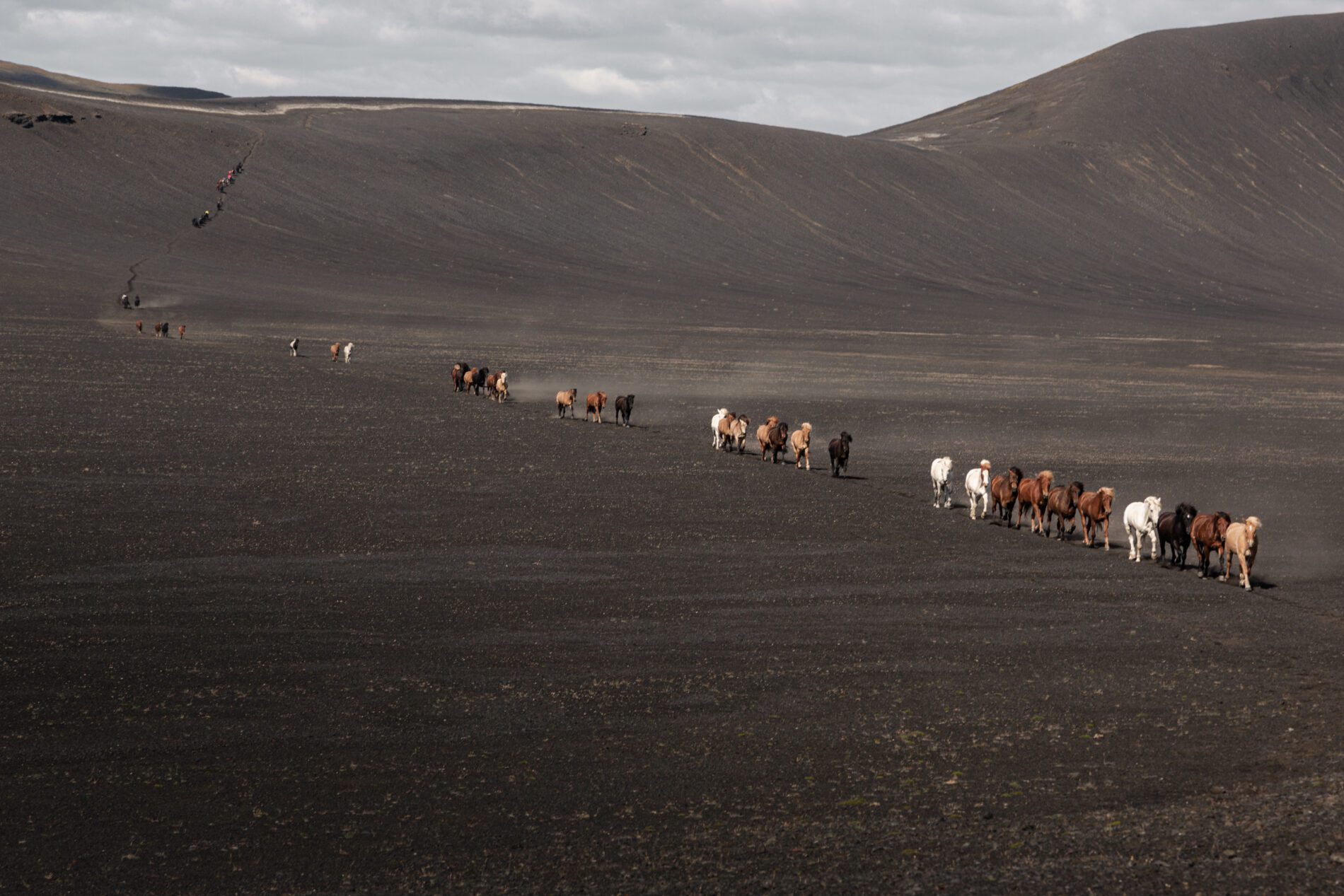
When settlers arrived in Iceland more than a thousand years ago, they brought horses with them from their homelands in Scandinavia and the British Isles. These animals were carefully chosen, as space on the ships was limited and only the most valuable livestock could make the journey. Once in Iceland, those horses became the foundation of a breed that would develop entirely on its own, without influence from the outside world.
Very early in Iceland’s history, laws were put in place that prevented the import of horses into the country. That decision, made more than nine hundred years ago, still stands today. As a result, the Icelandic horse has remained genetically isolated for over a millennium. Horses that leave Iceland are never allowed to return, protecting the health and purity of the breed. This uninterrupted lineage is unique in the modern horse world and plays a major role in what makes the Icelandic horse so distinctive.
Life in Iceland was never easy, and the horses had to adapt quickly. Long winters, limited grazing, volcanic landscapes, and unpredictable weather meant that only the strongest and most adaptable animals survived. Over generations, this natural selection created a horse that is remarkably tough, sure footed, and capable of traveling long distances across difficult terrain. At the same time, horses that worked closely with people needed to be cooperative and calm. Those qualities became just as important as physical strength.
Although the Icelandic horse is smaller than many other breeds, it has never been considered a pony. Its body is compact and powerful, with strong legs and a sturdy back that comfortably carries adult riders day after day. What surprises many first time riders most is how effortless riding feels, especially in the tölt. This smooth four beat gait allows the horse to move quickly across uneven ground while giving the rider a steady and comfortable seat. It is not something that was invented or trained into the breed later. It is the result of centuries of selective breeding based on what people needed to travel safely and efficiently through the Icelandic landscape.
Beyond its physical abilities, the Icelandic horse is known for its personality. Many are curious, people oriented, and confident without being nervous. These traits come from generations of close contact with humans, where trust and cooperation were essential. On farms, horses were part of daily life, not separate from it. That connection is still visible today, whether you meet a horse in a pasture, on a trail, or at a stable.
Over time, the role of the Icelandic horse has changed. What was once a vital means of transport and farm work has become a partner in sport, leisure, and travel. Yet the bond between horse and human remains much the same. The Icelandic horse carries the history of the island. Every ride is a continuation of a story that began more than a thousand years ago and is still being written today.